



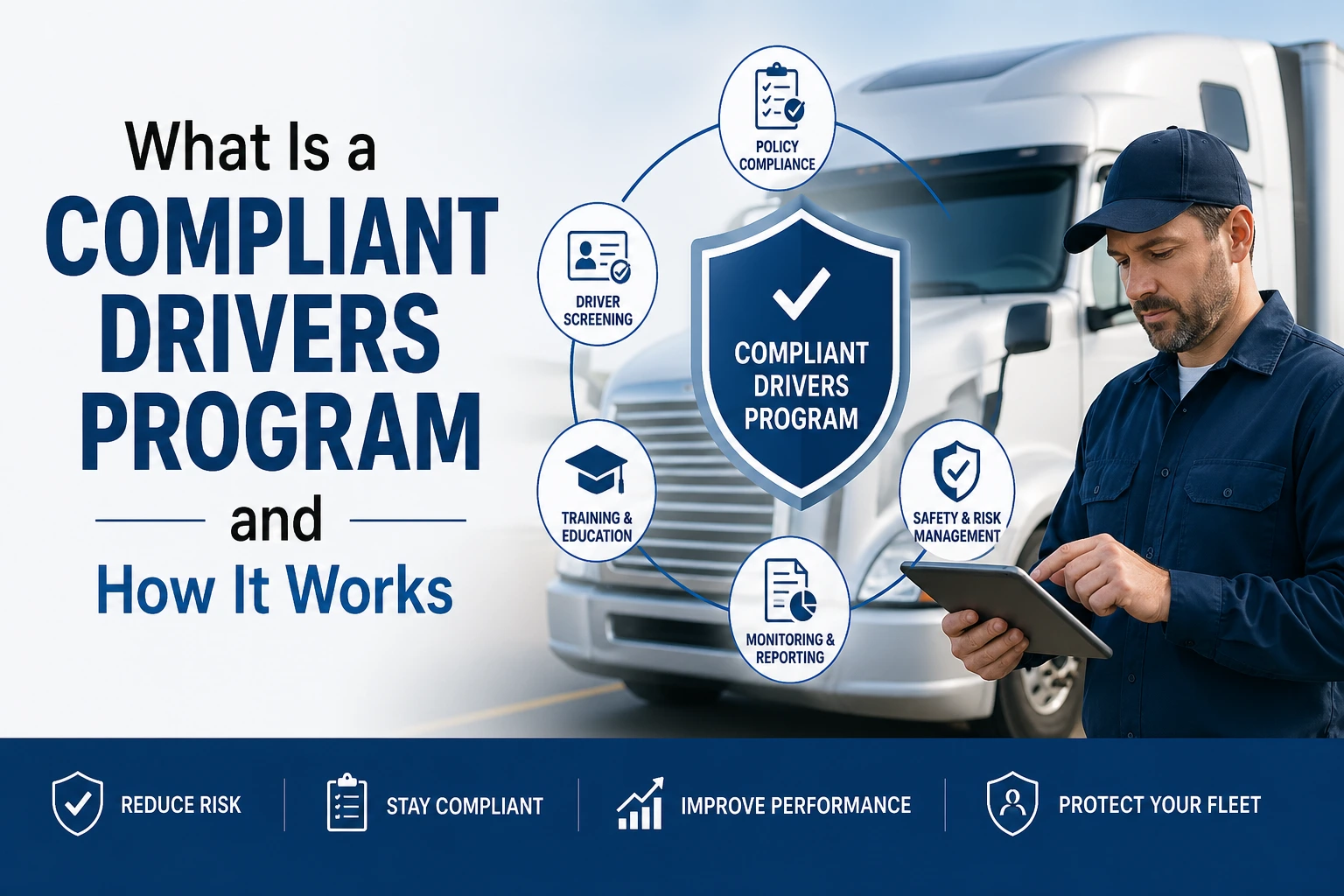
A compliant drivers program is a structured system that helps businesses verify driver qualifications, track insurance, and reduce compliance risk across employee-owned or company-used vehicles, making compliant drivers program insurance a key part of fleet safety and reimbursement policies. It works by setting written requirements, collecting proof, monitoring records, and taking action when documents or driving records fall out of compliance.
Introduction to a Compliant Drivers Program
A compliant drivers program is designed for organizations that need drivers to meet safety, insurance, and documentation standards consistently. In practice, it gives HR, fleet, safety, and finance teams one process for managing driver eligibility instead of relying on scattered spreadsheets or manual follow-up. For employers using employee-owned vehicles, the program often ties reimbursement to proof of insurance, which is why compliant drivers program insurance is so closely connected to risk control. For fleet operators, the same idea extends to driver qualification files, MVR monitoring, and drug-and-alcohol oversight.
The main goal is simple: reduce surprises. A compliant drivers program helps companies know whether each driver is insured, qualified, and currently fit to operate a vehicle for work. That matters because missing documents, outdated insurance, or unresolved violations can create financial, legal, and operational problems.
Why It Matters
Driver compliance is not just a paperwork exercise. It affects liability, safety, reimbursement, audit readiness, and the company’s reputation. When a driver uses a personal vehicle for work, the employer may face exposure under vicarious liability principles if the employee causes a crash while acting on behalf of the company. That is one of the biggest reasons businesses build a compliant drivers program around insurance verification and recordkeeping.
For fleet operations, the stakes are also high because poor documentation can lead to fines, out-of-service orders, lower CSA scores, and failed audits. A strong program gives companies early warning before a small issue becomes a major compliance event. It also creates a clear standard so the same rules apply to every driver.
Core Components
A complete compliant drivers program usually includes four major parts: written policies, insurance verification, driver record monitoring, and enforcement procedures. The insurance side often starts with proof of coverage, usually by collecting a current declarations page from each driver. In employee-car programs, that proof is frequently tied to reimbursement, meaning no valid insurance, no payment.
A fleet-focused program typically also includes driver qualification file management, MVR review, and drug-and-alcohol testing oversight. These components help create a full picture of whether a driver remains eligible and safe to operate on behalf of the company. The best programs make the process repeatable, documented, and easy to audit.
How Insurance Verification Works
Insurance verification is one of the most important parts of compliant drivers program insurance. Employers commonly require drivers to upload a current insurance declarations page that shows the policy is active and meets the company’s minimum limits. The declarations page is useful because it summarizes the core coverage details quickly, without needing to review the entire policy.
Many employers verify coverage every six months so the check aligns with renewal cycles. That schedule reduces the chance that a policy lapses between annual reviews. A company can also connect verification to reimbursement software, so drivers must stay compliant to receive payment. This is especially practical in FAVR and other employee-vehicle reimbursement models.
Minimum Coverage Standards
A compliant drivers program usually sets a written minimum insurance requirement rather than relying on state minimums alone. mBurse recommends a higher standard such as 250/500/100, while noting that 100/300/50 may be a bare minimum in many situations. The reason is straightforward: state minimums may not be enough to protect the company or the driver after a serious accident.
Using a higher standard can reduce the risk that damages exceed the employee’s policy limits, which could push claims toward the employer. It also sends a clear message that the company treats driving for work as a higher-risk activity that deserves stronger protection. For many organizations, this becomes the foundation of compliant drivers program insurance.
Step-by-Step Process
The process usually begins with a written policy that explains who must comply, what coverage is required, how often proof is collected, and what happens if the driver fails to comply. Next, the company gathers the declarations page or other required evidence, then reviews it against the minimum standards. If the policy is active and adequate, the driver remains eligible for work-related driving or reimbursement.
After approval, the company continues to monitor compliance through reminders, renewals, and periodic checks. In a fleet environment, the same overall process extends to DQ files, MVRs, and testing records. The idea is to move from one-time approval to ongoing control.
Driver Records and Safety
A compliant drivers program is stronger when insurance is paired with broader driver safety controls. For fleets, this means keeping DQ files complete and current, because these files are one of the first things reviewed in audits. Common DQ file items include the driver application, MVRs from relevant states, medical certificates, CDL or road test records, and annual updates.
MVR monitoring matters because it reveals violations, suspensions, or license issues that could change a driver’s eligibility. Some companies move beyond annual checks and use continuous monitoring so they can react faster to risk. In the same way that insurance verification protects the company financially, driver record monitoring protects it operationally.
Compliance and Reimbursement
One of the most practical uses of a compliant drivers program is linking compliance to reimbursement. In employee-car models, employers may require proof of insurance before approving mileage reimbursement or FAVR payments. This makes the reimbursement system a built-in compliance checkpoint.
That structure is helpful because it encourages drivers to keep their insurance active and within company standards. It also reduces administrative back-and-forth, since the company can rely on a consistent proof requirement rather than chasing documents manually. For businesses that reimburse employees regularly, this is one of the clearest ways to operationalize compliant drivers program insurance.
Fleet Program Structure
In trucking and commercial fleets, a compliant drivers program usually means more than insurance. It includes qualification tracking, MVR review, drug-and-alcohol program oversight, and document updates in one system. National Fleet Services explains that such a structure helps teams stay audit-ready and reduces the risk of missed requirements.
A centralized system can flag missing files, track renewals, and store records so managers can respond quickly during inspections. That reduces clerical errors and helps standardize hiring and monitoring practices across the fleet. The best programs are proactive rather than reactive, which means they identify gaps before regulators do.
How It Reduces Risk
Risk reduction is one of the strongest business reasons to implement a compliant drivers program. Verifying insurance helps reduce exposure if a crash occurs, while MVR checks and DQ management help prevent unsafe drivers from staying on the road unnoticed. The combined effect is lower legal exposure, better safety, and fewer surprise costs.
It also helps with brand trust. Customers, insurers, and regulators tend to view organized compliance systems as a sign of operational maturity. In other words, the program is not only about avoiding penalties; it is also about building a safer, more dependable driving culture.
Role of NHTSA CAP
The NHTSA Compliance Assistance Program (CAP) is relevant because it reflects the broader principle of helping regulated entities understand and follow safety requirements. NHTSA says the purpose of CAP is to help participants in the motor vehicle and equipment industry, especially new entrants, comply with safety regulations. That aligns with the same philosophy behind a compliant drivers program: clear standards, better guidance, and fewer compliance failures.
While NHTSA CAP is not the same thing as an employee insurance or fleet driver program, it reinforces the value of structured compliance support. For content strategy, this is useful because it adds authority and shows that compliance assistance is a recognized best practice across the motor vehicle ecosystem.
Best Practices for Setup
A strong program starts with a written policy that defines the insurance minimum, document submission rules, review frequency, and consequences for noncompliance. It should also state why the policy exists, so drivers understand that it protects both the company and the employee. Clear communication matters because compliance works best when drivers see the policy as a safety standard rather than a punishment.
The next best practice is automation. Automated reminders, digital uploads, and centralized recordkeeping reduce human error and make renewal tracking much easier. Finally, companies should review the policy regularly so it stays aligned with current insurance, safety, and regulatory expectations.
Common Mistakes
One common mistake is relying only on state minimum insurance limits, which may be too low for work-related driving. Another is checking insurance only once a year, which leaves a long window where policies may lapse unnoticed. Some companies also fail to connect the policy to a clear enforcement rule, which weakens the program.
In fleet environments, a major mistake is treating DQ files, MVRs, and testing as separate, disconnected tasks. That fragmented approach makes it easier for documents to go missing and harder for managers to spot risk early. A real compliant drivers program works best when these tasks are part of one process.
In Short Summary
A compliant drivers program is a compliance, insurance, and safety system that helps businesses verify drivers, manage risk, and stay audit-ready. For employee vehicles, compliant drivers program insurance usually means collecting proof of active coverage and enforcing minimum policy limits before reimbursement is approved. For commercial fleets, it also includes DQ files, MVR monitoring, and drug-and-alcohol compliance.
The strongest programs are written, automated, and reviewed on a schedule. They protect the company, support the driver, and make compliance easier to manage over time. That combination is exactly why the topic is important for employers, fleets, and safety teams today.
FAQs
What is a compliant drivers program?
It is a structured system for checking driver insurance, records, and compliance requirements so a company can reduce risk and stay audit-ready.
What is compliant drivers program insurance?
It refers to the insurance-verification part of the program, where drivers must show active coverage that meets the employer’s minimum standards.
Why do employers ask for a declarations page?
Because the declarations page shows whether a policy is active and what coverage limits apply, making it the easiest proof of insurance.
How often should insurance be verified?
A common best practice is every six months, which matches many policy renewal cycles.
What minimum coverage is often recommended?
mBurse recommends 250/500/100 as a strong standard, while noting that 100/300/50 may be a basic minimum in some cases.
Does this program only apply to truck fleets?
No. It applies to employee-owned vehicles, reimbursement programs, and commercial fleets that need driver compliance controls.
What records are included in a fleet compliant drivers program?
Typical records include DQ files, MVRs, medical certificates, CDL copies, annual reviews, and drug-and-alcohol testing documentation.
Why are MVR checks important?
MVRs reveal violations, suspensions, and licensing issues that may affect whether a driver should continue driving for work.
What happens if a driver is not compliant?
They may lose reimbursement eligibility, be removed from driving duties, or trigger corrective action depending on company policy.
How does this program help during audits?
It keeps records organized, current, and easy to access, which reduces the chance of missing documents or failed reviews.
Is a compliant drivers program the same as a safe driving policy?
No. A safe driving policy is one part of it, while the broader program also includes insurance, records, monitoring, and enforcement.
Why does compliance improve insurance outcomes?
Because organized driver screening, verified coverage, and consistent monitoring can reduce accidents, claims risk, and administrative issues


