



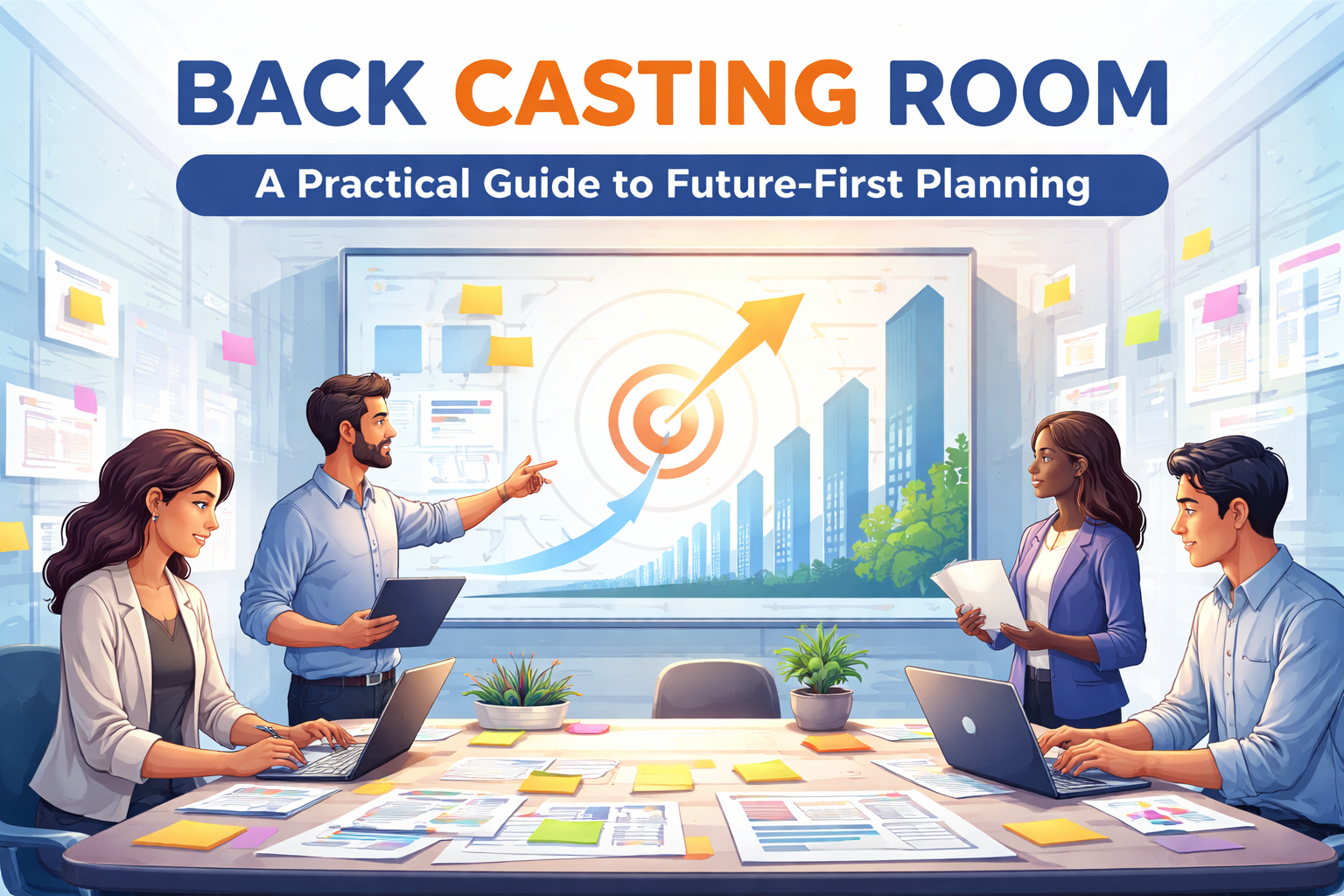
A Back Casting Room is a space where people stop guessing about the future and start designing it. Instead of asking, “What do current trends suggest?”, the back casting approach asks, “What future do we want, and what steps will get us there?” This simple shift makes it a powerful tool for business strategy, sustainability planning, innovation, and long-term decision-making.
What Is a Back Casting Room?
A Back Casting Room is not just a physical room with whiteboards and sticky notes. It is also a mindset and a planning method built around reverse thinking: define the goal first, then work backward to map the path. In that sense, it is the opposite of traditional forecasting, which usually starts with the present and projects forward based on trends.
Think of it like planning a road trip in reverse. You start by choosing the destination, then figure out the exits, turns, fuel stops, and route needed to arrive safely. That same logic helps teams make clearer, more intentional decisions because every step is tied to a specific future outcome.
Why It Matters
The Back Casting Room matters because many of today’s problems are too complex for linear planning. Issues like climate action, digital transformation, business growth, and organizational change often involve uncertainty, multiple stakeholders, and long timelines, which makes simple trend-based planning less effective.
Back casting helps teams think beyond short-term noise and focus on what success should look like in the long run. That makes it especially useful when you need a strategy that is not just realistic, but also ambitious and adaptable. It also improves alignment, because everyone in the room is working from the same vision instead of separate assumptions.
How the Process Works
The back casting process usually begins with a clearly defined future state. For example, a company might decide it wants to become carbon neutral, a city might aim for sustainable urban growth, or a team might want to launch a new product category within three years. Once the future is defined, the group works backward to identify major milestones and the actions required to reach them.
A typical Back Casting Room session often includes these steps:
- Define the ideal future outcome.
- Identify the conditions that must exist to make that outcome possible.
- Work backward to list key milestones.
- Break each milestone into actionable steps.
- Review risks, bottlenecks, and resource needs.
This process works best when participants are encouraged to challenge assumptions and think creatively. The room becomes a place for structured brainstorming, where the goal is not to predict everything perfectly, but to build a logical and actionable roadmap.
Key Features
A good Back Casting Room usually includes tools and conditions that support collaboration and clarity. Common elements include whiteboards, digital collaboration tools, visual planning aids, and a comfortable environment that helps people think freely. These features matter because the method depends on discussion, visualization, and shared problem-solving.
Some of the most important features are:
- Vision-first planning, where the end goal drives the conversation.
- Cross-functional collaboration, bringing together different perspectives.
- Visual mapping tools, so ideas and milestones are easy to see.
- Flexible thinking, so teams can revise the roadmap when needed.
When these elements come together, the room becomes more than a meeting space. It becomes a strategic thinking environment that helps people move from vague ideas to concrete direction.
Real-World Uses
The Back Casting Room has applications across many industries. In environmental planning, it is often used to define goals such as zero waste, carbon reduction, or climate resilience, then identify the policies and actions needed to reach those outcomes. In business strategy, teams use it to plan long-term growth, market expansion, and innovation roadmaps.
It is also useful in urban development, where planners need to balance growth, sustainability, infrastructure, and public needs over time. Beyond that, marketers, product teams, and even individuals can use back casting to map career goals, build digital strategies, or plan major life changes. The flexibility of the method is one reason it continues to gain attention across industries.
Benefits of the Method
One of the biggest benefits of a Back Casting Room is clarity. When you start with a future goal, it becomes easier to decide what matters now and what does not. That focus can reduce wasted effort and help teams make better decisions faster.
Other major benefits include:
- Better strategic alignment, because all actions connect to the same future outcome.
- More innovative thinking, since teams are not limited by current constraints.
- Stronger collaboration, because different people contribute to the roadmap.
- Greater resilience, because teams can identify risks early and plan around them.
This method is especially valuable when the future is uncertain but the end goal is clear. Instead of reacting to change, teams can prepare for it with purpose.
Challenges To Consider
Like any planning method, back casting is not perfect. It can be time-consuming, especially if the goal is broad or if stakeholders disagree on the desired future. It also depends heavily on the quality of the participants, because weak facilitation can turn the session into wishful thinking instead of real planning.
Another challenge is uncertainty. Even if the end goal is clear, external factors such as policy shifts, market changes, or technology disruptions can force the roadmap to change. That is why the best Back Casting Room sessions are treated as living strategies, not one-time workshops.
How To Use It Well
If you are setting up a Back Casting Room, keep the focus on outcomes, not just ideas. Start with a specific and measurable future state, then work backward through milestones, resources, and deadlines. The more concrete the future vision, the more useful the roadmap will be.
A strong session also needs the right mix of people. Include decision-makers, subject-matter experts, and people who understand implementation, because strategy only works when it can be executed. Finally, revisit the plan regularly so it stays relevant as conditions change.
Final Take
The Back Casting Room is a smart way to think about the future because it flips the usual planning process. Rather than asking what is likely to happen, it asks what should happen and how to make it real. That makes it a strong fit for organizations and teams that want more intention, more alignment, and more long-term impact.
For today’s fast-moving business environment, this future-first approach is more than a planning tool. It is a practical way to turn big goals into step-by-step action, especially when the path forward is complex.


